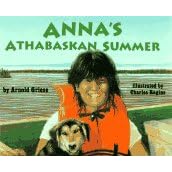
My first attempt at finding Native American literature in the library was what I thought to be very successful. I was able to find many books with ease. After a closer look at the directions and the rubric, I discovered that all the books I had chosen were folklore or folktales. A lot of Native American literature involves folktales because authors tell tales from certain tribes about their beliefs of how the world came to be, or about morals and lessons. For the purpose of this assignment though, these books would not work. So, on my second trip to the library I had a little more difficulty. I had found a great website written by Debbie Reese called “American Indians In Children’s Literature” at http://americanindiansinchildrensliterature.blogspot.com/2006/05/recommended-childrensyareferenceresour.html. This site gave me a wonderful list of books that she recommended which were labeled with their genre and the appropriate age level for the books. It was disappointing though that many of these books were not available at the library I was visiting. Also, I wanted to use a couple of picture books because I hope to teach in younger elementary grades, so then I could use the books later on in my classroom once I found and analyzed them, which were more difficult to locate than novels. After searching for a while I finally found, The Good Luck Cat, by Joy Harjo and Anna’s Athabaskan Summer by Arnold Griese to use as picture books for my project. Many of the other books that were tagged as Native American Juvenile Fiction within the library catalog were written by Native American authors, but did not have much Native American content or had very small Native American content and were not written by insider authors. I chose to use The Good Luck Cat because it was a normal story with a Native American character and a brief mention of the culture. It was nice to see a regular story with a minority main character. I chose Anna’s Athabaskan Summer because it focused on one specific tribe and a tribe that I had not heard of before. Although the author was not an insider, his research seemed deep and he had been immersed within the culture.
Novels by Native American authors with Native American content were much easier to find at the East Lansing Library. With ease I found many novels by Joseph Bruchac, Michael Dorris, and Louise Edrich. I chose to use Morning Girl by Bruchac within my project because the story line intrigued me. I had not read much about the perspective of the American Indians when Columbus came to the Americas, so this idea caught my attention. I had also read a couple annotated bibliographies that stated this as a good book to read along with a recommendation in our course pack reading. I also chose to read The Arrow Over the Door by Bruchac because it is Historical Fiction. Normally this is a genre I am not interested in, but since this was an opportunity to read about Native American Literature, which I am interested in, I decided this would be a good combination for me to read about. Both of these books proved to be interesting and good pieces of multicultural literature after reading them. I was impressed with the disproving of stereotypes and the creativity of writing style. Interestingly both novels were written in the style of two alternating points of view by chapter. This was an interesting comparison since in Morning Girl the two view points were brother and sister who knew each other, and in The Arrow Over the Door they were two young men who did not know each other at all until the end of the story.
Also while looking Native American Children’s literature I found a book, Ten Little Rabbits. This book has been discussed as a bad representation of Native American literature in our class and in “Native Americans in Children’s Literature” by Debbie Reese. In the article she states, “Ten Little Rabbits suggests to children that, simply by putting on Native American clothing anyone or anything can become Native American” (175). Along with this misleading idea in the book there are many others. After seeing this book in the library I was disappointed that a library that seems to do a fairly good job with providing quality multicultural literature would have this book out for people to read. It is also disappointing and almost scary that in the back cover of the book it states, “‘Hurray! At long last primary school educators and lovers of children’s literature have an accurate Native American book written for primary children’ – The Five Owls” I am glad we discussed this book in class and read about it, because people need to know not to believe everything that is written within or on a book’s cover. As future educators we need to be able to look at literature and have at least some basic knowledge about many different cultures in order to try and analyze literature in a multicultural way in order to help teach the children of the future.
Overall I feel the books I chose to review provide quality multicultural literature. My set of texts provides books for a combination of both younger elementary and upper elementary/middle school students. The books are also from different genres including realistic fiction and historical fiction. The books are creatively written and provide quality information about Native Americans, with three of the four written by insider authors, and the fourth a very knowledgeable outsider. I am glad I now have of a set of texts to use when I have my own classroom, which will incorporate Native American Literature along with all other types of multicultural literature as well!